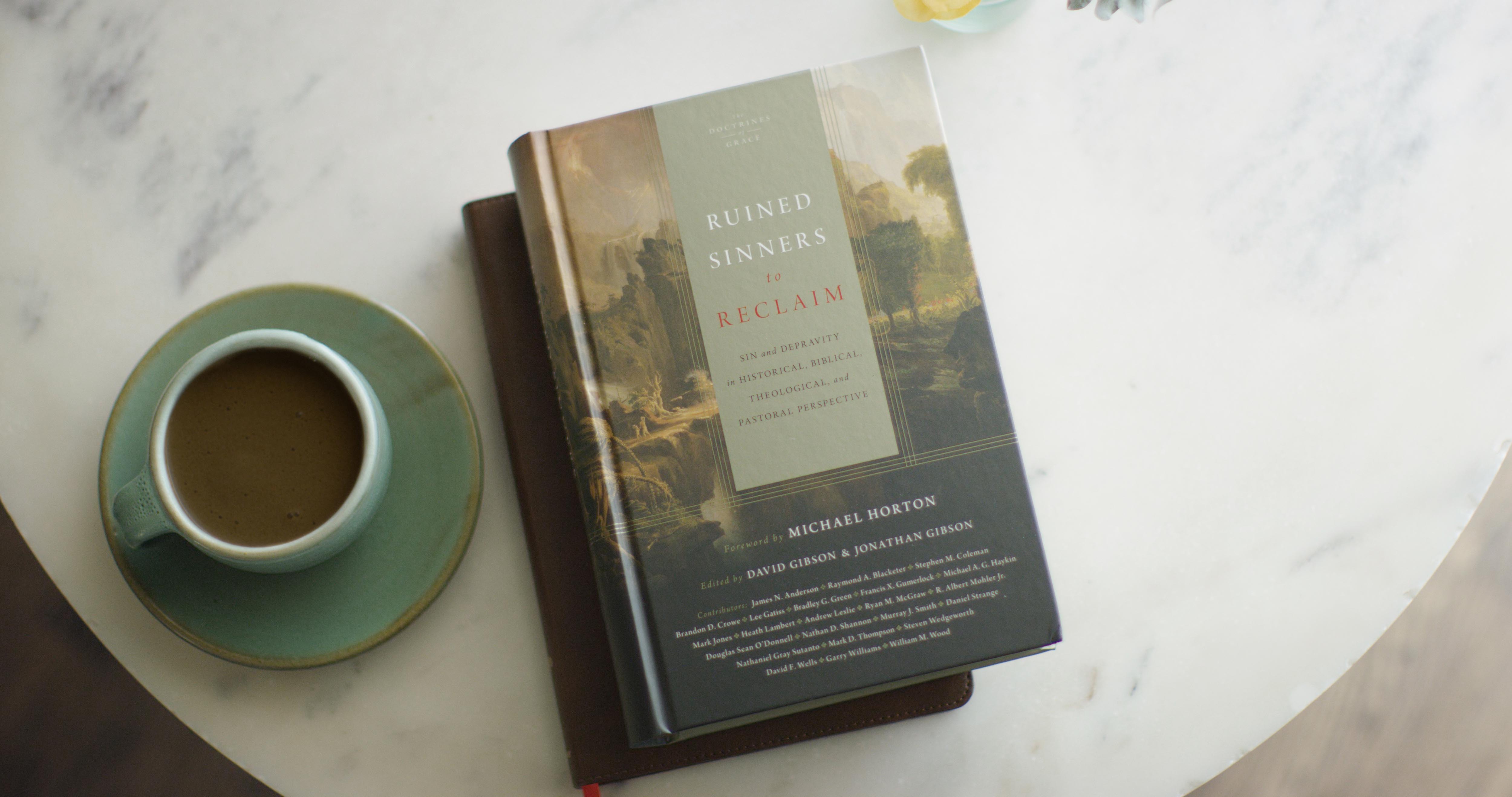
This book is a compilation of chapters, each written by a respected evangelical scholar, about sin and depravity – covering historical, biblical, theological, and pastoral perspectives. I enjoyed reading portions of the first book in this “Doctrines of Grace Series” called From Heaven He Came and Sought Her, so I was eager to get my hands on this second book in the series. I find the chapters thorough, interesting, and exceedingly scholarly.
It is a hefty book, at almost 1,000 pages. So if you want to read this straight through, be prepared for an in-depth, technical reading experience. Many readers may want to pick and choose a few chapters first to get a feel for the level of engagement the authors display within the topic. Seminary students working on a paper within the general topic of sin and depravity will find this book extremely helpful. Students will find a plethora of helpful footnotes that direct them to other resources they can use for their paper. As I worked on my dissertation recently, this is the type of resource I was looking for, as it is a book that serves as a signpost pointing to other great resources.
The editors of this volume provide the following extended definition of total depravity:
“The doctrine of total depravity states that, with the exception of the Lord Jesus Christ, all of humanity, from the very moment of conception, share a corrupt human nature which renders us liable to God’s wrath, incapable of any saving good, inclined toward evil, and which leaves us both dead in sin and enslaved to sin. Left to ourselves, we neither want to nor can return to the God who made us, and, without the regenerating grace of the Holy Spirit, we cannot know him as our heavenly Father.
Our mind has lost the pure knowledge of God so that we are blind, self-centered, and self-impressed. Our will has squandered its holiness and surrendered its freedom; we are wicked in our rebellion against a good God and his ways, and, more than this, we are enslaved to our rebellion. Our affections are impure and find delight in what is evil. We do not rejoice constantly in God. It is not that we are as bad as we possibly could be; rather, total depravity simply describes the fact that there is not one single aspect of our constitution that is unaffected by sin’s derangements.”
This quote provides an example of the thorough nature of the academic-type level of this book.
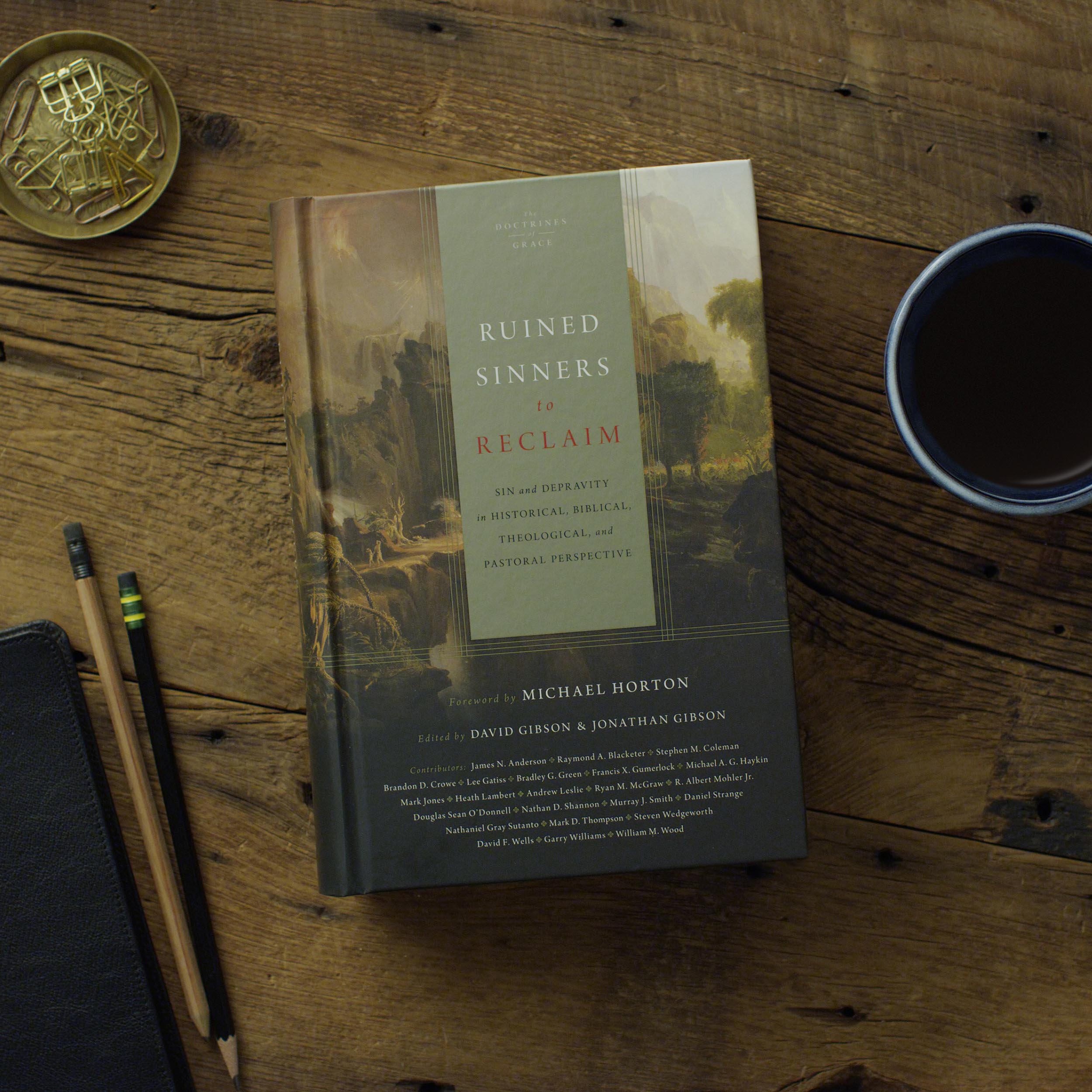
Here is a full list of the sections, chapter titles with authors, and topics that this book covers. I especially appreciate the chapters by Michael Haykin, Douglas Sean O’Donnell, David Wells, and Albert Mohler.
Introduction
Chapter 1: “Salvation Belongs to the Lord”
Mapping the Doctrine of the Total Depravity of Human Creatures
David Gibson and Jonathan Gibson
Part 1: Sin and Depravity in Church History
Chapter 2: “Rivers of Dragons and Mouths of Lions and Dark Forces”
Sin in the Patristic Tradition
Michael A. G. Haykin
Chapter 3: “Give What You Command, and Then Command Whatever You Will”
Augustine, Pelagius, and the Question of Original Sin
Bradley G. Green
Chapter 4: Ruined Sinners in a Pseudo-Augustinian Treatise on Predestination
Francis X. Gumerlock
Chapter 5: The Bondage of the Will
Luther versus Erasmus
Mark D. Thompson
Chapter 6: “Whatever Remains Is a Horrible Deformity”
Sin in Early to Post-Reformation Theology
Raymond A. Blacketer
Chapter 7: Sin and the Synod of Dort
Lee Gatiss
Chapter 8: “By a Divine Constitution”
Old Princeton and the Imputation of Adam’s Sin
Ryan M. McGraw
Chapter 9: “The Chief Evil of Human Life”
Sin in the Life and Thought of the English Particular Baptists, 1680s–1830s
Michael A. G. Haykin
Part 2: Sin and Depravity in the Bible
Chapter 10: From Eden to Exile
The Story of Sin in Genesis–2 Kings
William M. Wood
Chapter 11: The Folly, Mystery, and Absurdity of Sin in the Wisdom Literature
Stephen M. Coleman
Chapter 12: Breaching the Covenant
Sin in the Prophets
William M. Wood
Chapter 13: “If You, Then, Who Are Evil”
Sin in the Synoptic Gospels and Acts
Douglas Sean O’Donnell
Chapter 14: “Everyone Who Practices Sin Is a Slave to Sin”
Sin in the Johannine Literature
Murray J. Smith
Chapter 15: “Wretched Man That I Am!”
Sin in the Pauline Epistles
Jonathan Gibson
Chapter 16: “That None of You May Be Hardened by the Deceitfulness of Sin”
Sin in Hebrews, James, 1–2 Peter, and Jude
Brandon D. Crowe
Part 3: Sin and Depravity in Theological Perspective
Chapter 17: I and the Norm
Comparative Religions and Alternative Philosophies of Sin
Nathan D. Shannon
Chapter 18: Whence This Evil?
Toward a Biblical Theodicy
James N. Anderson
Chapter 19: Total Depravity and God’s Covenant with Adam (1)
A Case for the Covenant
Garry Williams
Chapter 20: Total Depravity and God’s Covenant with Adam (2)
The Imputation of Adam’s Sin
Garry Williams
Chapter 21: The Heart Wants What It Wants
A Protestant Assessment of the Doctrine of Concupiscence
Steven Wedgeworth
Chapter 22: On Revelation and the Psychical Effects of Sin
Toward a Constructive Proposal
Nathaniel Gray Sutanto
Chapter 23: Original Sin in Modern Theology
Charles Hodge and Herman Bavinck on Friedrich Schleiermacher
Nathaniel Gray Sutanto
Chapter 24: “Incurvatus Est in Se”
Toward a Theology of Sin
Andrew Leslie
Chapter 25: “Distinguishd among Ten Thousand”
The Sinlessness of Christ
Mark Jones
Part 4: Sin and Depravity in Pastoral Practice
Chapter 26: Losing Our Religion
The Impact of Secularization on the Understanding of Sin
David F. Wells
Chapter 27: An Apology for “Elenctics”
The Unmasking of Sin in the Retrieval of a Theological Discipline
Daniel Strange
Chapter 28: Evangelizing Fallen People
Apologetics and the Doctrine of Sin
James N. Anderson
Chapter 29: Counseling Fallen People
Applying the Truth of Sola Scriptura
Heath Lambert
Chapter 30: Preaching to Sinners in a Secular Age
R. Albert Mohler Jr.

