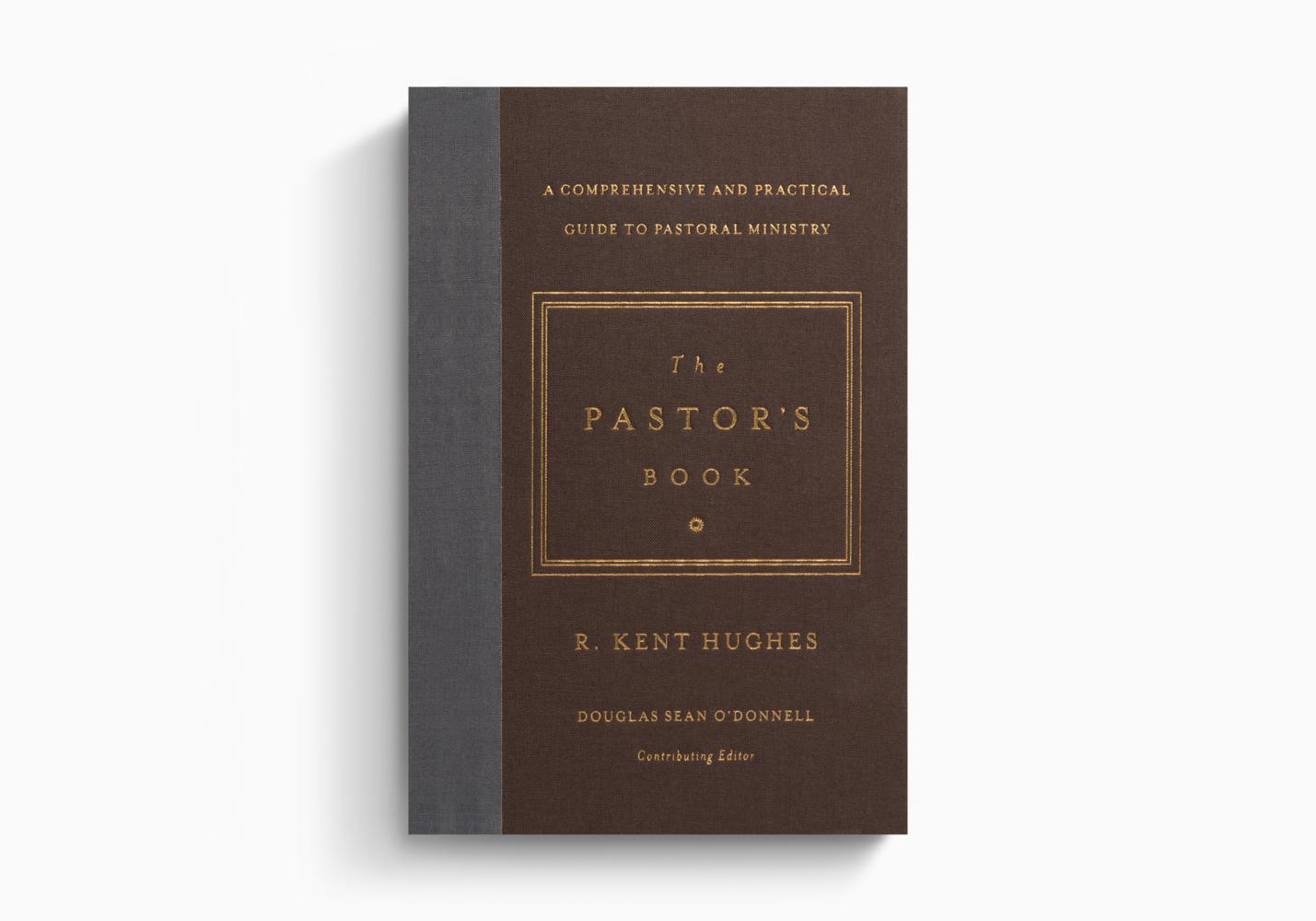
The Pastor’s Book, by Kent Hughes, along with Douglas Sean O’Donnell, is a treasure trove of practical resources for pastors. It’s been a tried-and-true pastoral ministry handbook for over a decade now. It is also written with the conviction that all Christian ministry must be centered on the gospel of Jesus Christ. Hughes states that, “the day-in-and-day-out ministry of the pastor is meant to be wholly gospel-infused.” Thus, those who use this book as a tool for pastoral ministry will observe that the resources included within are well-grounded in the gospel. This is a confidence booster.
The authors list four desires for the book: (1) that it will encourage a thoroughly gospel-centered ministry, (2) that it will refresh the church from the wells of historic orthodoxy, (3) that it will provide many of the best practical examples of pastoral practices, and (4) that it will become a go-to resource for busy pastors.
Regarding the fourth desire for the book in the list above, I personally know multiple seasoned pastors who have used this book as their go-to resource for brushing up on many aspects of pastoral ministry as life happens – such as doing visitations, funerals, weddings, and Sunday service leading.
This book can also be a tool to train future pastors. Recently, our pastoral staff team used the chapter on hospital visitation to teach our young leaders the importance of care visits and how to do them effectively. The chapter on visitation was a helpful springboard for discussion on this important aspect of pastoral ministry. This book is not only highly useful, but it’s also highly instructive. The book teaches the importance of each aspect of pastoral ministry. For example, when giving tools for worship services, the authors provide some historical context and teaching on the subject.
“For some Christians, especially in the free-church tradition, the word liturgy has a negative connotation. To them, that word fits churches that don’t preach the Bible. But the word liturgy comes from the Greek word latreuo (meaning “to work or serve”), which is found in several places in the New Testament. So liturgy is a Bible word, and a good (not bad) one, and “one’s work in worship” is not condemnable but commendable: “There must be some holy sweat if you are to please and glorify God.” Some think we can divide churches into two categories—liturgical and non-liturgical. However, in reality, every church is liturgical because all churches have an order of service. Even the most charismatic churches, which claim they just let the Spirit have his way, usually follow the same order of service every Sunday…So the question is not whether such-and-such a church has a liturgy (order of service). Of course it does. All churches are liturgical in that sense. Rather, the question is this: Is its liturgy biblical or unbiblical? Is its worship governed by the Word or by something or someone else—perhaps the whims of culture or personal preference? Nehemiah 8 gives us a biblical picture of a God-honoring liturgy: a call to worship, a formal reading of Scripture, an oral exposition or explanation of Scripture, and a celebration of a sacred meal. Does this seem familiar? Yes! For nearly 2,500 years, God’s people have followed that basic liturgy. God is not a God of disorder. Just as he sent his Spirit at the beginning of time to bring order to creation, so he still sends his Spirit in these last days to bring order to his new creation—the church.”
Here is the table of contents of the book. Use this list to get an idea of the comprehensive scope of the topics that this book covers within pastoral ministry:
Part 1: Christian Gatherings
Sunday Worship
Annual Services
Weddings
Funerals
Enrichment: Poetry to Enhance Preaching and Worship
Part 2: Parts of the Worship Service
Public Prayers
The Historic Christian Creeds
Hymns and Songs
Baptism
Communion
Part 3: Ministerial Duties
Pastoral Counseling
Hospital Visitation
Appendix: Sample Wedding Services from Various Churches

