
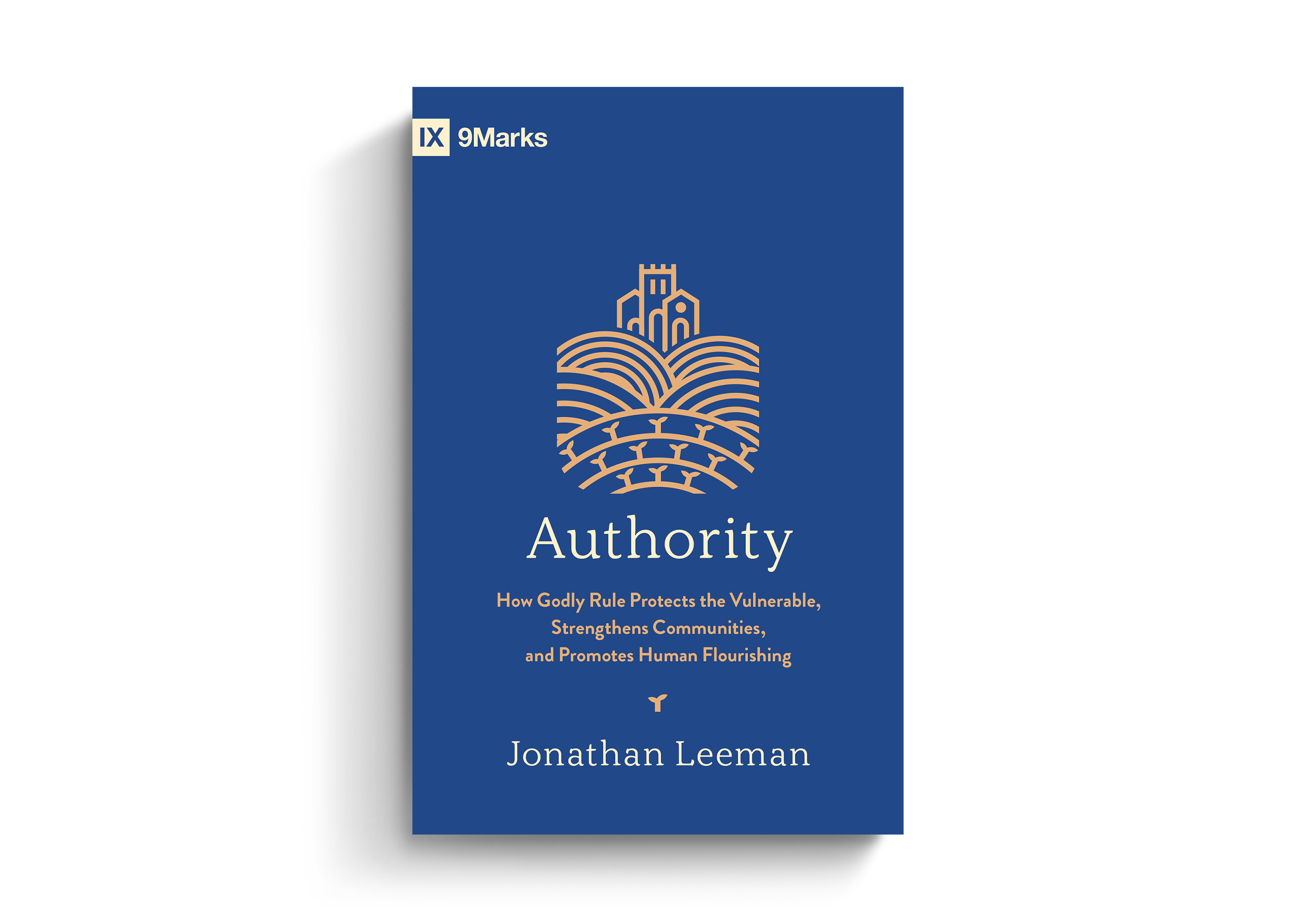
Authority. Before reading on, take five seconds to stop and stare at that first word.
What thoughts come to mind? Are these thoughts generally positive or negative? Does the word stir in you good memories? Perhaps it generates thoughts of a parent or teacher who helped you grow into the person you are now. Or maybe the word brings to mind difficulties from your past. Perhaps you think of an authority figure who has let you down.
Jonathan Leeman wrote this book to help people stare hard at the good and bad of authority – both in the Bible and in life. He says, “Bad authority steals and destroys life, while good authority creates life. Beyond that, God gave us authority to protect the vulnerable, strengthen communities, and promote human flourishing. If you’re a critic of authority, you might try staring hard at the good. If you’re an advocate of authority, and especially if you’re in a position of authority, you need to stare hard at the bad” (p. 13).
Authority is a complicated subject. There exists much angst toward and concern about authority in our culture today. Yet this book serves us well by surveying what the Bible teaches about authority. Jonathan Leeman says the goal in the book is, “to help every husband, parent, pastor, policeman, politician, officer, and employer understand the is good and dangerous gift of authority, and then equip you to handle it with care” (p. 13). Leeman also wrote the book to encourage everyone to reflect more on who God is and what he is like. Leeman says, “The topic of authority takes us right to the heart of who God is, and how he means for us to image him. What you think about authority, finally, reveals quite a bit about what you think about God” (pp. 13-14). If this is true, authority is undoubtedly a very important concept!
This book is very well organized and clear on its main points. If you simply read through the first three parts of the table of contents, you get a clear idea of Leeman’s main points about authority. For example, part three of the book answers the question, how does good authority work? Then each of the next five chapters are his five principles to answer the question.
- It is not unaccountable, but submits to a Higher Authority.
- It doesn’t steal life, but creates it.
- It is not unreachable, but seeks wisdom.
- It is neither permissive nor authoritarian, but administers discipline.
- It is not self-protective, but bears the costs.
Five chapters, five parts to the answer.
The book also contains excellent definitions of terms and many interesting stories and examples of authority. Part four is very helpful as it takes the main roles of authority defined by the Bible and explains them well, such as husband, parent, and church. Leeman makes a helpful distinction between having authority of command versus having authority of counsel and how they play out in each role of authority in the world today.
I also appreciate that each chapter in section four starts with the covenant that authorizes each role, the main passages about the role, and a job description. For example, the covenental authorization for a husband is the Adamic covenant (Gen. 1:28, 2:15, 18). The main passages for the husband’s authority are, 1 Cor. 11:3; Eph. 5:22-28; and 1 Peter 3:1-7. And the job description for a husband is, “to cultivate oneness by leading and loving his wife in the shared work of earthly dominion, relying on her help, competence, and wisdom” (p. 168).
Authority in our society is attacked at every angle and greatly undervalued. Yet we all have various authorities in our lives and many of us also possess authority over others. So authority is inevitable. This book proves valuable as it helps us think through this topic biblically, thoughtfully, and practically. I highly recommend this book and it is now my go-to book on this topic.
Table of Contents
Introduction: Our Angst about Authority
Part I: What Is Authority?
Chapter 1: Authority Is God’s Good Gift for Sharing His Rule and Glory
Chapter 2: Authority Is Satan’s Sinister Scheme for Supplanting God
Chapter 3: Authority Is Christ’s Claim to Rescue and Redeem
Part II: What Is Submission?
Chapter 4: Submission Is the Path to Growth, Authority, and Likeness to the God-Man
Chapter 5: Submission Is Never Absolute and Always Has Limits
Part III: How Does Good Authority Work? Five Principles
Chapter 6: It Is Not Unaccountable, but Submits to a Higher Authority
Chapter 7: It Doesn’t Steal Life, but Creates It
Chapter 8: It Is Not Unteachable, but Seeks Wisdom
Chapter 9: It Is neither Permissive nor Authoritarian, but Administers Discipline
Chapter 10: It Is Not Self-Protective, but Bears the Costs
Part IV: What Does Authority Look Like in Action?
Chapter 11: Two Kinds of Authority: Command and Counsel
Chapter 12: The Husband (Counsel)
Chapter 13: The Parent (Command)
Chapter 14: The Government (Command)
Chapter 15: The Manager (Command)
Chapter 16: The Church (Command)
Chapter 17: The Elder (Counsel)
Conclusion: Equality, the Fear of God, and a Reward.
I received this book in exchange for an honest review.
 Equip
Equip 